

Programme
1) Master of Science in Development Studies (MSc in Development Studies)
Development Studies is a dynamic field of study concerned with social, political and economic change and the policy challenges. It draws on a number of disciplines including geography, politics, economics, sociology and anthropology, but in bringing these knowledge areas together it has developed its own distinctive approach. The Development Studies focus on the contemporary issues of development in Nepal and other South Asian Countries. The problems of development are urgent, massive, complex, and often transcend the boundaries of conventional academic disciplines. Meeting these challenges demands the input of creative development professionals who can apply to and integrate critical thinking and practical experiences from a wide range of perspectives and can be innovative in seeking meaningful solutions. The programme aims to equip students with the analytical and practical skills; theoretical knowledge and skills that meet the challenges of today’s development practice in Nepal and abroad. It also aims to promote and develop research-based analytical capacity of students both at policy development and practice at the real world.
What can you do with a degree in Development Studies?
Non-governmental aid organisations: Graduates can work in the developing countries on development projects, or in developed countries running campaigns, lobbying, raising money, and development education.
For example see: Oxfam and Amnesty International.
International development institutions: Graduates will gain skills and knowledge to work with international organisations such as the United Nations and the World Bank.
Government policy: Graduates will be qualified to work in the public service at all levels developing policy and programmes concerning the development and aid. For example: working with the Nepal Government in the National Planning Commission or in Aid and Policy Department.
University research: Graduates can continue studying in the university pursuing postgraduate research, or work as an academic teaching and researching in development studies. For example see: Centre for Development Studies and the National Centre for Development Studies.
Consultancy: Graduates can work as freelance 'expert' with various development organisations related with the field of studies.
Course Components:
There are two components in the Master’s Degree Syllabus:
i) Basic/ Compulsory Course :
The basic/compulsory courses offer seven modules, as follows: Society, Development and Change; Development, Governance and Institutions; Gender and Development; Project Development and Management; Research Methodology; M.Sc. Seminar; M.Sc. Thesis.
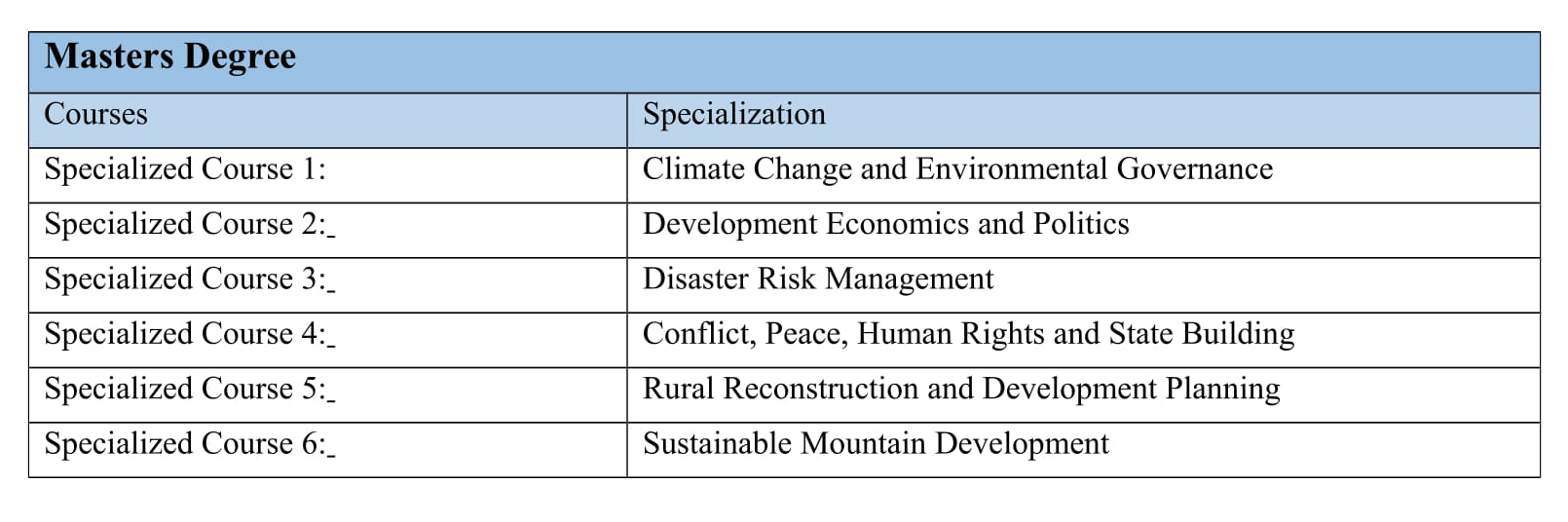
ii) Specialized Course:
There are five specialized courses under the MSc in Development Studies programme. They are as follows:
Masters Degree
Courses Specialization